
 Products
 Products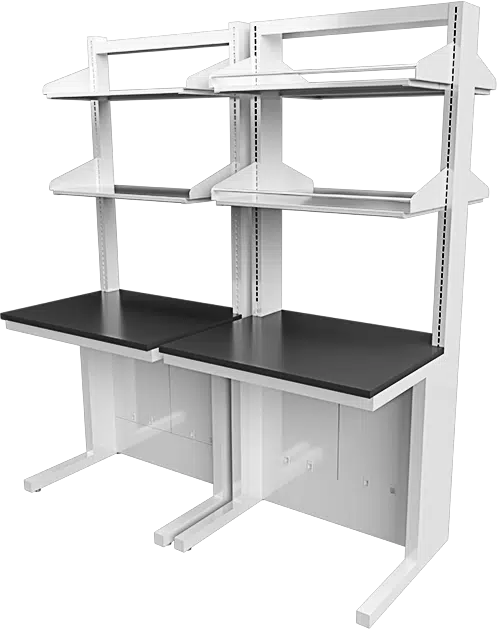
Lab benches are not furniture. They are infrastructure.
When a bench system fails, it doesn’t just look worn. It disrupts workflow, creates safety risks, and often forces premature replacement that could have been avoided with better upfront decisions.
If you are planning a lab upgrade, here is what determines whether your new benches will perform for twenty years, or start deteriorating in five.
1. Structural Integrity: Engineered for Real Load, Not Just Static Weight
Most bench systems look strong when empty.
The real question is how they perform under:
- Concentrated loads from centrifuges, incubators, and freezers
- Dynamic loads from equipment that vibrates
- Repeated impact from daily use
- Long-term deflection over time
In educational and research environments, we typically recommend a minimum load rating of 1,000 lbs per 72” of length, depending on application of course.
Steel-framed modular systems with reinforced posts and cross-bracing dramatically outperform light-duty millwork or panel-based construction. Welded frames reduce long-term movement compared to purely bolted assemblies. We have replaced bench systems for clients that showed structural deflection in under 2 years because the original design prioritized cost over engineering.
If working with heavy chemicals, use Easy-to-clean, self-skinning polyurethane material for the seat and back. These are durable and incredibly easy to clean.
When evaluating durability, ask for:
- Published load ratings – Frame Rated for 1,000 lbs
- Frame gauge thickness – 16ga Tubing
- Compliance with SEFA 2, SEFA 3, SEFA 8 & SEFA 10
If a supplier cannot provide those details, that is a red flag.
2. Surface Selection: Where Most Failures Begin
The most common failure point in lab benches is not the frame. It is the work surface.
Improper material selection leads to:
- Swelling at edges from moisture intrusion
- Surface delamination from aggressive cleaning protocols
- Staining or chemical etching
- Heat damage under equipment
- Major Scratching
Material should always be matched to use case:
Phenolic Resin
Ideal for general science and educational labs. Strong resistance to moisture and most common chemicals.
Epoxy Resin
Required for high-heat environments and aggressive chemical exposure. Especially suitable for post-secondary wet chemistry labs and industrial research.
Stainless Steel
Best for hygienic environments, medical labs, and cleanrooms where sanitation protocols are strict.
It is important to note that we have seen laminate-based tops deteriorate/delaminate in less than 5 years even in K-12 settings. Durability means choosing a surface that matches cleaning protocol, not just chemical exposure.
When Selecting Your Work Surfaces, Ask For:
- Chemical resistance charts
- Heat resistance ratings
- Thickness and edge construction details
- Warranty coverage specific to surface material
3. Ergonomics Is a Durability Issue
Durability is not just structural. It is human.
Fixed-height benches may last physically, but they contribute to:
- Long-term strain injuries
- Poor posture in students and technicians
- Reduced efficiency
Adjustable or configurable systems allow labs to support:
- Seated and standing work
- ADA accessibility
- Evolving workflows
If a bench cannot adapt without compromising structural integrity, it is not future-ready.
In our experience, adjustable steel-framed systems maintain structural stability better than retrofitted height-modified millwork.
4. Flexibility: The Most Overlooked Cost Driver
Labs evolve. Equipment changes. Research focus shifts. Teams grow. The most expensive mistake we see is specifying a fixed millwork system that cannot be reconfigured without demolition.
Durable systems should support:
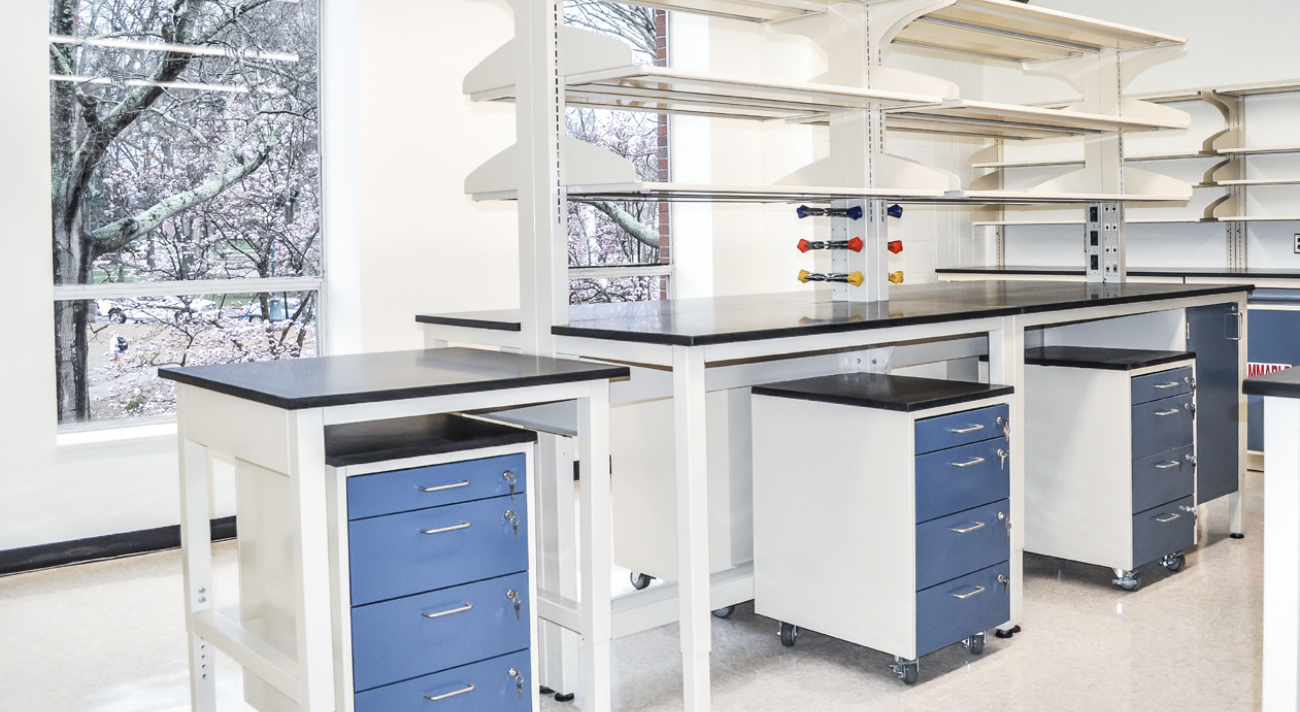
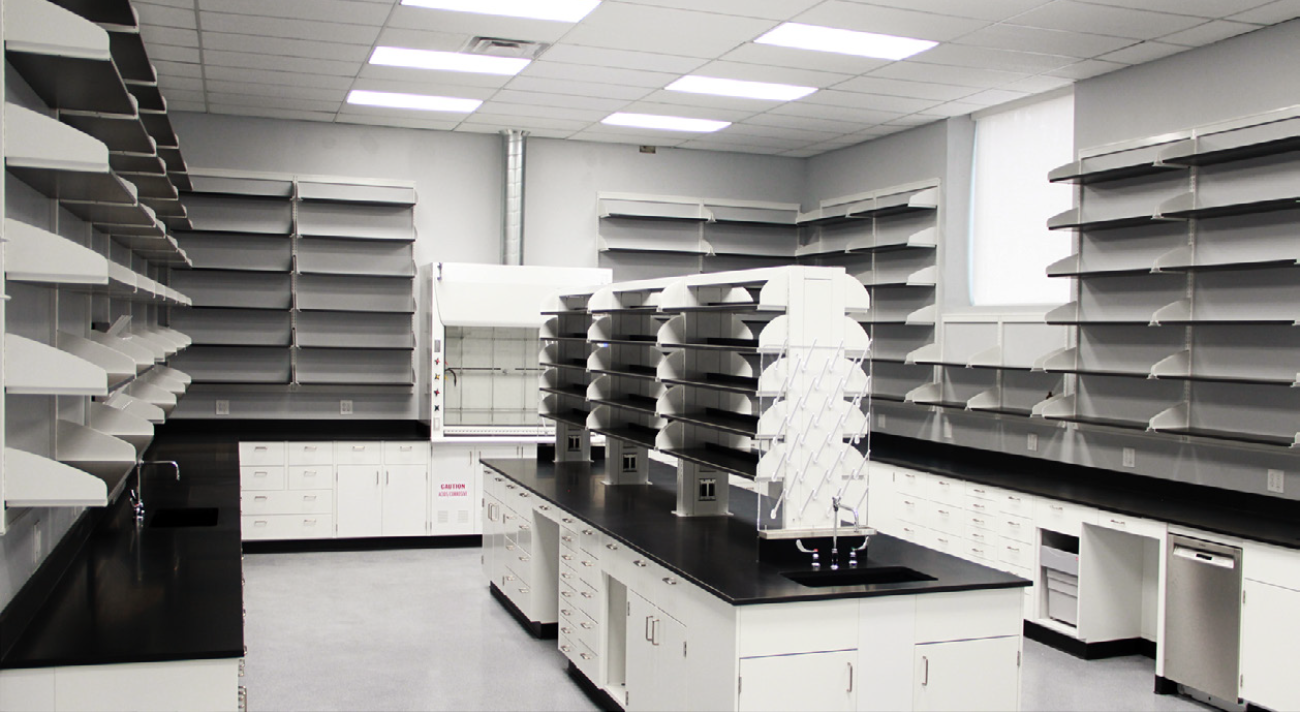
• Modular shelving/cabinetry and overhead service integration
• Relocation without structural damage
• Addition of utilities without full reconstruction
• Mobile storage compatibility
We have many clients who have outgrown their facilities and were easily able to bring their current workbenches with them for simple and quick relocation. Flexibility is long-term durability.
5. Utility Integration and Infrastructure Planning
Bench systems must work with:
- Electrical distribution
- Data
- Gas
- Plumbing
Poor planning leads to:
- Floor penetrations that limit future changes
- Bench removal to modify utilities
- Expensive downtime
When Selecting Your Work Bench System, Ask:
- Does the system require anchoring?
- Can utilities be added later without removal?
- Is the system compatible with overhead services?
Infrastructure compatibility often matters more than finish selection.
6. Installation Quality Determines Lifespan
Even a well-engineered bench will fail if improperly installed.
Installation should include:
- Final site measurement before fabrication
- Leveling verification
- Utility coordination
- Structural anchoring review where required
When Planning A Laboratory Bench Installation, Ask about:
- Installer training
- In-house vs subcontracted installation
- Typical project volume in Canadian labs
- Warranty coverage (Canadian Scientific has an industry leading 5 year warranty!)
Experience matters.
7. Total Cost of Ownership: The Metric That Matters
Durable lab benches may cost more upfront.
However, lifecycle cost includes:
- Replacement frequency
- Downtime
- Reconfiguration costs
- Waste and disposal
- Facility disruption
A bench system that lasts 15–20 years with modular adaptability often costs significantly less than replacing a light-duty system every 7–10 years. Procurement should evaluate lifecycle value, not just purchase price.
Choosing the right lab benches is not a cosmetic decision. It is an infrastructure investment.
The right system will:
- Withstand daily mechanical and chemical stress
- Adapt to evolving research needs
- Support user health and accessibility
- Reduce long-term capital expenditure
The wrong system will look fine at installation and quietly degrade until replacement becomes unavoidable.
The difference? Engineering, specification, and installation experience.
Free Resource: Lab Planning Checklist for Canadian Facilities
Be sure to consider every detail, from surface materials to mechanical integration. Download our free “Lab Planning Checklist for Canadian Facilities.” Inside, you’ll find a pre-installation checklist for architects and lab managers.

Contact us today to learn how Canadian Scientific can maximize your laboratory design and future-proof your investment!
Return to Blog Main Page
Advance your research with full confidence in your lab.