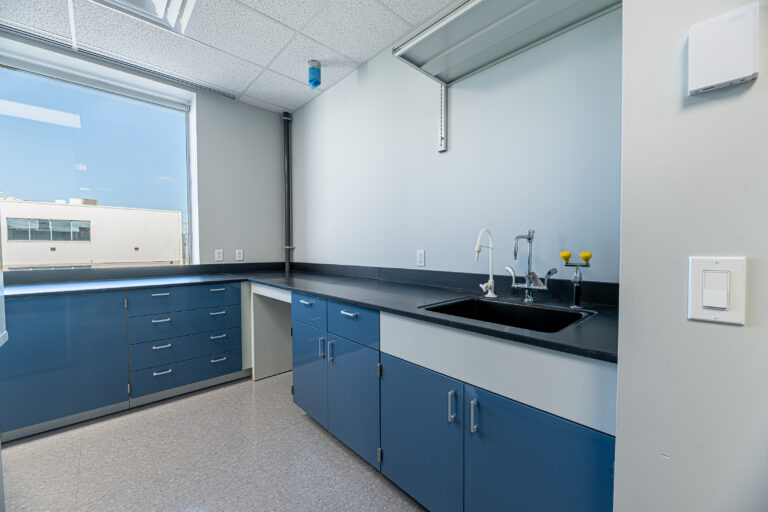
Successful pharmaceutical lab environments are built around three priorities:
- regulatory compliance
- contamination control
- long-term durability and adaptability
Understanding how materials, airflow, and equipment integration work together is essential when planning new pharmaceutical laboratories or upgrading existing facilities.
Regulatory Compliance and Containment Requirements
Durable and Hygienic Casework Systems
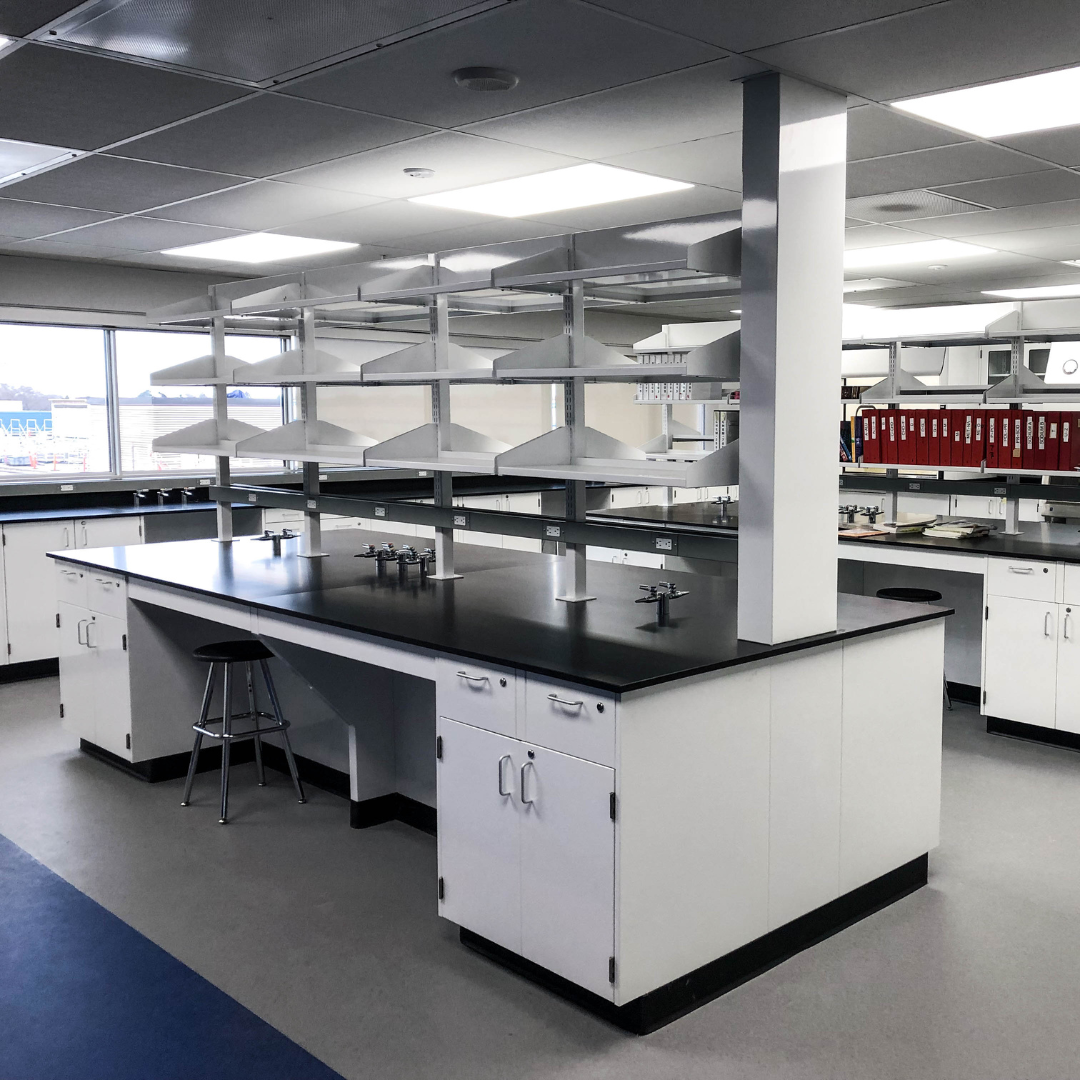
Metal Laboratory Casework
Metal casework systems are widely used across healthcare and pharmaceutical environments because they provide a balance of durability, cleanability, and adaptability.
Key advantages include:
- Thermosetting laboratory-grade epoxy powder coating
- Strong resistance to chemicals and surface wear
- Uniform modular construction
- Interchangeable components for future reconfiguration
Metal systems are often selected for analytical laboratories, quality control spaces, and general pharmaceutical work areas where durability and flexibility are equally important.
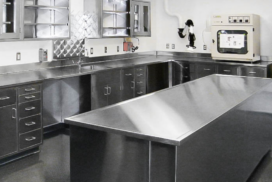
Stainless Steel Casework
In sterile processing areas, compounding rooms, and cleanroom environments, stainless steel casework is frequently required.T304 and T316 stainless steel cabinets provide:- Non-porous hygienic surfaces
- Resistance to bleach and aggressive disinfectants
- Corrosion resistance in high-moisture environments
- Long service life under intensive cleaning protocols
Countertop and Work Surface Performance
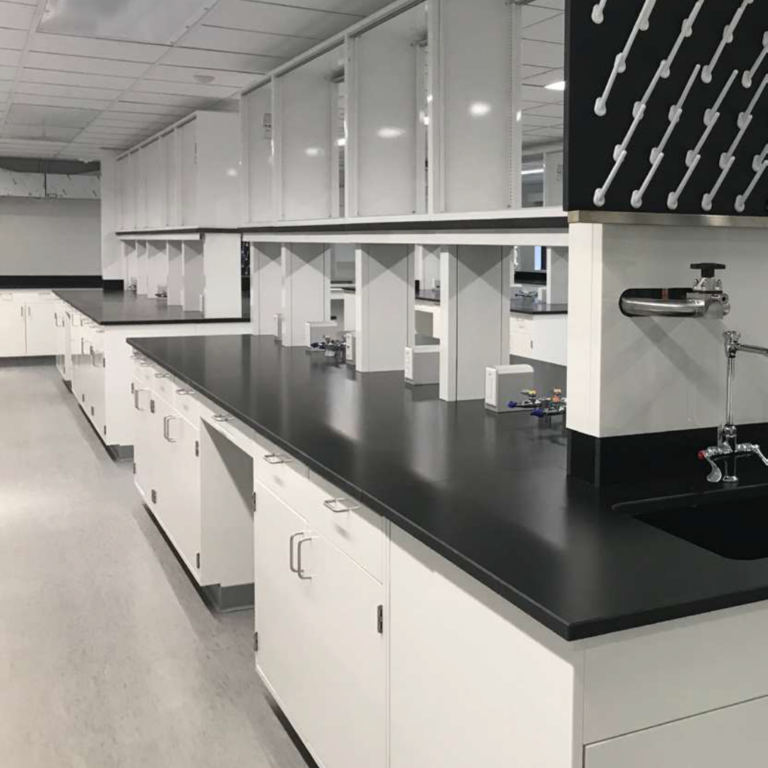
Phenolic Resin Surfaces
Chemical-resistant phenolic countertops manufactured to EN 438-4 Type CGS standards are designed for demanding laboratory environments.
These surfaces offer:
- high chemical resistance
- impact durability
- hygienic non-porous construction
- long-term performance under heavy use
Phenolic surfaces are commonly used in pharmaceutical R&D and analytical laboratories where durability and cost efficiency must coexist.
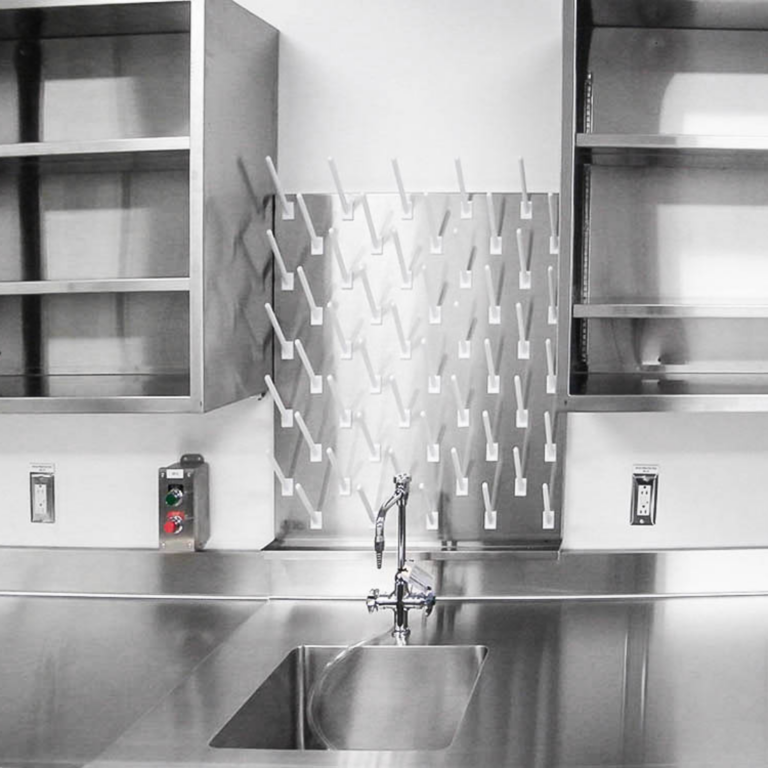
Stainless Steel Work Surfaces
Where sterility is the primary concern, stainless steel countertops are often preferred.
Available in T304 and T316 grades, stainless surfaces are commonly installed in:
- compounding laboratories
- cleanrooms
- sterile processing environments
Selecting between phenolic and stainless steel typically depends on sanitation intensity, exposure conditions, and regulatory requirements rather than aesthetics alone.
Ventilation and Airflow Management
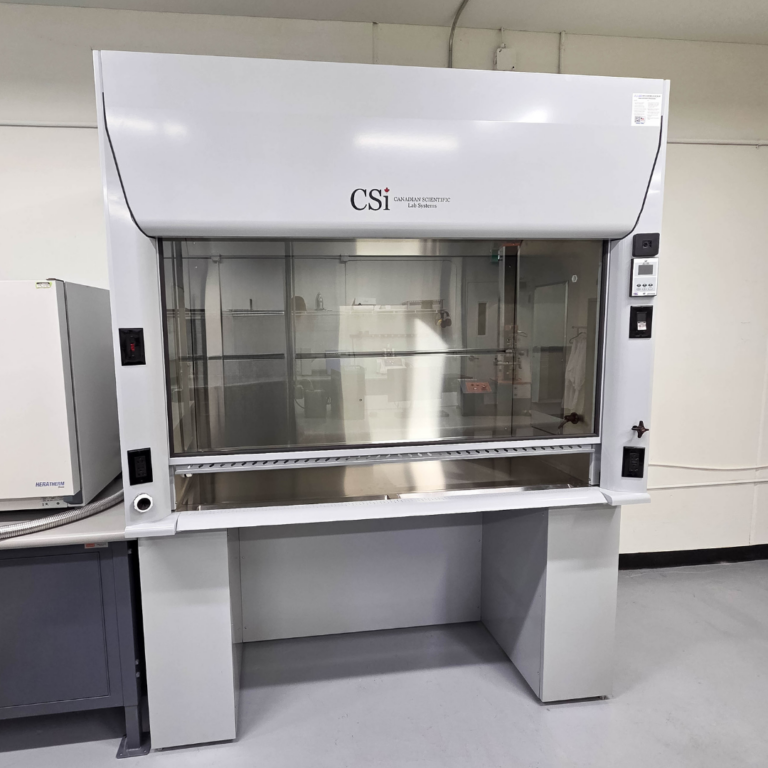
High-Performance Fume Hoods
Modern pharmaceutical laboratories rely on fume hoods that maintain containment while supporting energy efficiency goals.
Canadian Scientific’s Solution Fume Hood is engineered for both constant volume (CV) and variable air volume (VAV) systems and has passed ASHRAE 110 testing at 100 FPM and 60 FPM full open conditions.
Design features include:
- radiused airfoil design for smooth airflow
- unobstructed viewing area for operator visibility
- performance-focused airflow geometry
Proper hood selection and integration help prevent airflow disruption that can compromise containment performance.
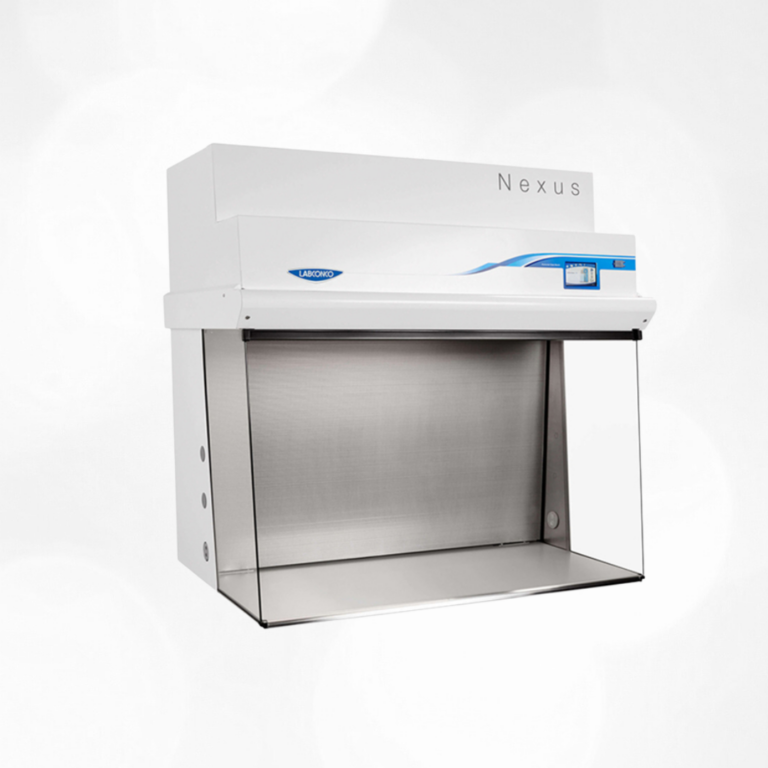
Laminar Flow and Clean Bench Systems
Many pharmaceutical processes require ISO-class clean environments.
Laminar flow systems provide filtered airflow for product protection applications such as:
- pharmacy compounding
- media preparation
- PCR workflows
- medical device assembly
It is important to note that clean benches protect the product, not the user, and should not be used with hazardous biological materials.
Biosafety Cabinets and Containment Equipment
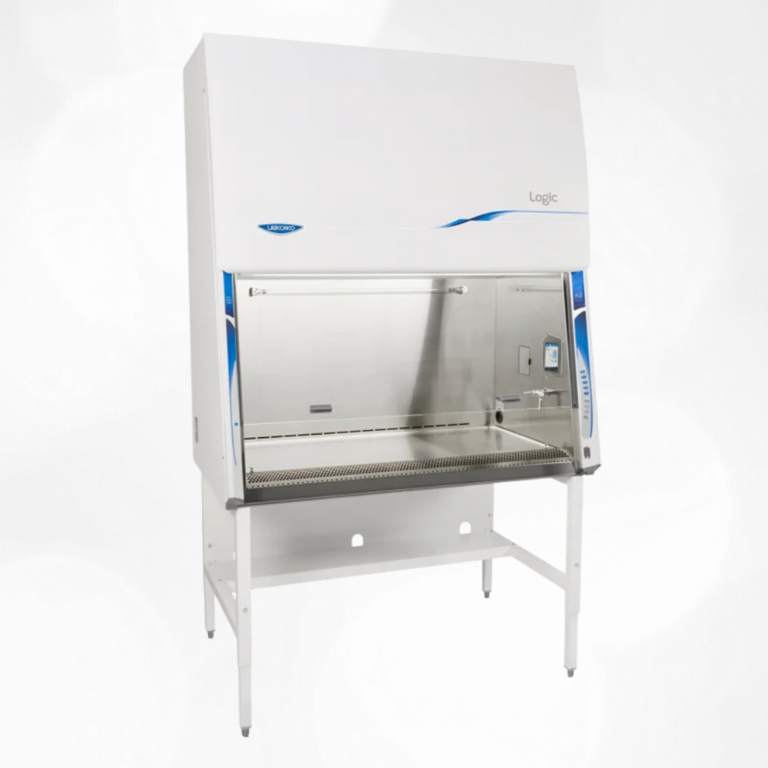
Labconco’s Logic and Prism biosafety cabinets provide:
- HEPA filtration systems
- Constant Airflow Profile (CAP™) technology
- unitized construction for durability
- dished work surfaces for simplified decontamination
- real-time monitoring through MyLogic™ OS
Correct cabinet selection ensures containment integrity while supporting ergonomic workflow.
Chemical-Resistant Sink Systems
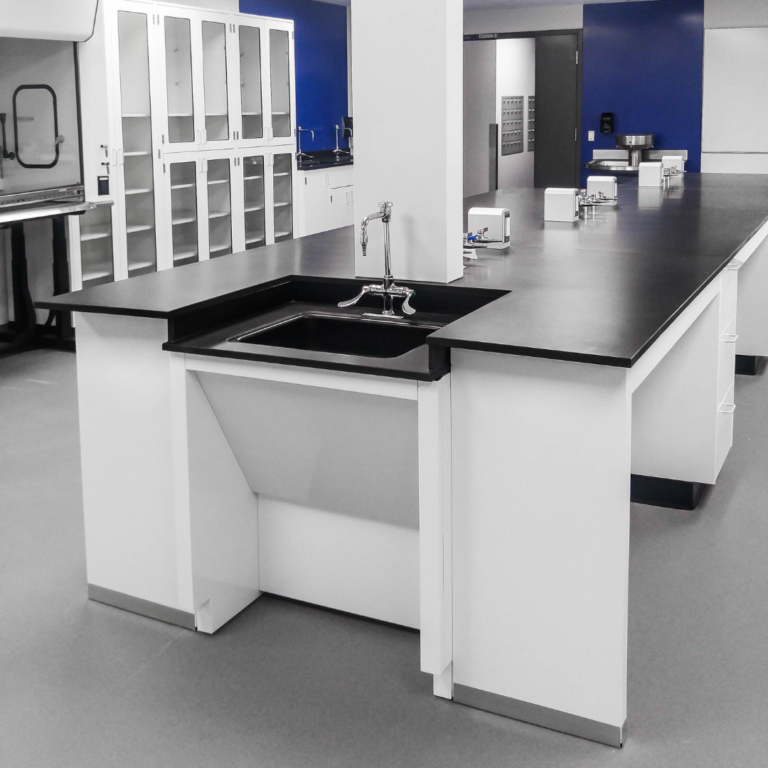
Durcon and Simmons epoxy sinks offer:
- Resistance to aggressive acids and solvents
- Non-flammable construction
- Non-absorbent hygienic surfaces
- Vibration damping properties
- Multiple installation configurations
These sinks are particularly effective in laboratories performing chemical processing or sterilization procedures where long-term material stability is essential.